
Flat & Commercial Roofing in Central Texas: TPO, EPDM, and Modified Bitumen
The three systems on most flat roofs here, and how to pick the right one for a Texas building.
By the Apex Roofing team · Central Texas
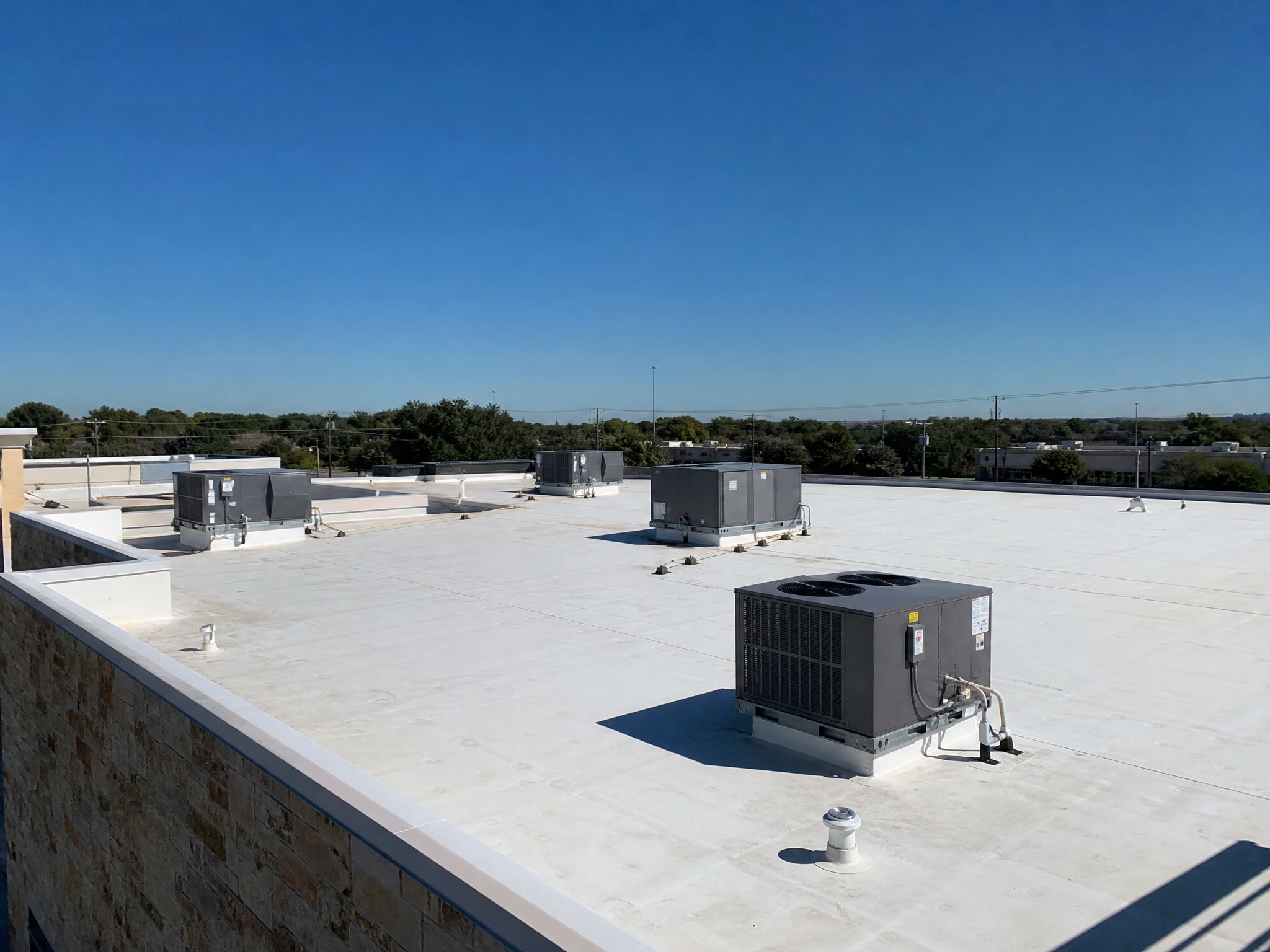
Drive past any commercial strip in Temple, Killeen, or the Austin metro and most of the roofs you cannot see from the road are flat or low-slope. Warehouses, retail centers, medical offices, and apartment buildings almost all use a different roofing approach than a pitched house roof. Flat roofs do not shed water the way a steep roof does, so the system has to form a continuous waterproof membrane that handles standing water, intense UV, and the thermal movement of a building that expands and contracts all day. Three systems dominate the Central Texas market, and each has a place.
TPO: the popular workhorse
TPO, short for thermoplastic polyolefin, is the most common new flat roof we install on Central Texas commercial buildings. The membrane comes in wide rolls that are heat-welded at the seams into a single watertight sheet. Its biggest advantage in our climate is the white reflective surface, which bounces sunlight and keeps the building cooler. On a Texas summer where the cooling bill runs a building owner thousands of dollars a month, that reflectivity pays for itself. TPO resists punctures reasonably well and carries strong warranties. It is usually the default recommendation for a new commercial roof here.
EPDM: the durable rubber option
EPDM is a synthetic rubber membrane, typically black, that has been roofing buildings for decades. It is extremely durable, handles temperature swings well, and is simple to repair. The trade-off in Texas is color. A black membrane absorbs heat instead of reflecting it, which works against you on a hot-climate cooling bill unless you add a reflective coating. EPDM still makes sense on certain buildings, especially where longevity and easy maintenance matter more than reflectivity, and lighter-colored EPDM formulations exist.
Modified bitumen: the layered system
Modified bitumen is the modern descendant of the old built-up tar-and-gravel roof. It uses asphalt reinforced with polymers, applied in layers, often with a granulated cap sheet for UV protection. It holds up well to foot traffic, which matters on roofs that get a lot of HVAC service work, and it is a proven option for smaller flat sections. It tends to retain more heat than a reflective TPO, so it is chosen more for toughness than for energy savings.
How to choose for a Central Texas building
- For lowest cooling costs and a new roof, reflective TPO is usually the front-runner.
- For maximum durability and easy repairs, EPDM is worth considering, ideally with a reflective coating.
- For roofs with heavy foot traffic and rooftop equipment, modified bitumen handles the wear.
- For any flat roof here, proper slope and drainage matter more than the membrane brand, because standing water is the enemy.
The Central Texas factors that drive the decision
Hail is a real concern even on flat roofs. The same storms that bruise residential shingles can puncture or scuff a commercial membrane, and a building owner should have the roof inspected after a major event. Ponding water is the other big one. A flat roof that does not drain within a couple of days after a Central Texas downpour will fail early no matter which membrane is on it, so drainage design is part of every quality installation.
The role of coatings and restoration
Not every aging flat roof needs a full tear-off. Reflective coatings can extend the life of a sound membrane by several years while cutting cooling costs, and they cost a fraction of a replacement. A silicone or acrylic coating seals minor cracks, reflects sunlight, and adds a layer of waterproofing over a roof that is worn but not failed. Restoration like this works best when the underlying membrane is still structurally intact and the seams are solid. For a building owner watching the budget, a professional inspection determines whether a coating buys useful years or whether the roof has reached the point where replacement is the smarter spend. Catching that window before the membrane fails is exactly why regular inspections pay for themselves on a commercial roof.
Keep a flat roof on a maintenance plan
Commercial flat roofs reward routine inspection more than any other roof type, because small membrane punctures and seam separations are cheap to fix early and expensive to ignore. Our commercial roofing team inspects, services, and replaces flat roofs across the region, and after a storm we recommend a storm damage inspection for any building that took hail. If you manage property in Temple or the surrounding area, a free assessment gives you a clear picture of where your roof stands.
Related articles
Managing a building with a flat roof?
We inspect, repair, and replace commercial flat roofs across Central Texas.