
Attic Ventilation and Texas Heat: Why Your Roof Needs to Breathe
A 150-degree attic ages a roof from below and runs your AC into the ground.
By the Apex Roofing team · Central Texas
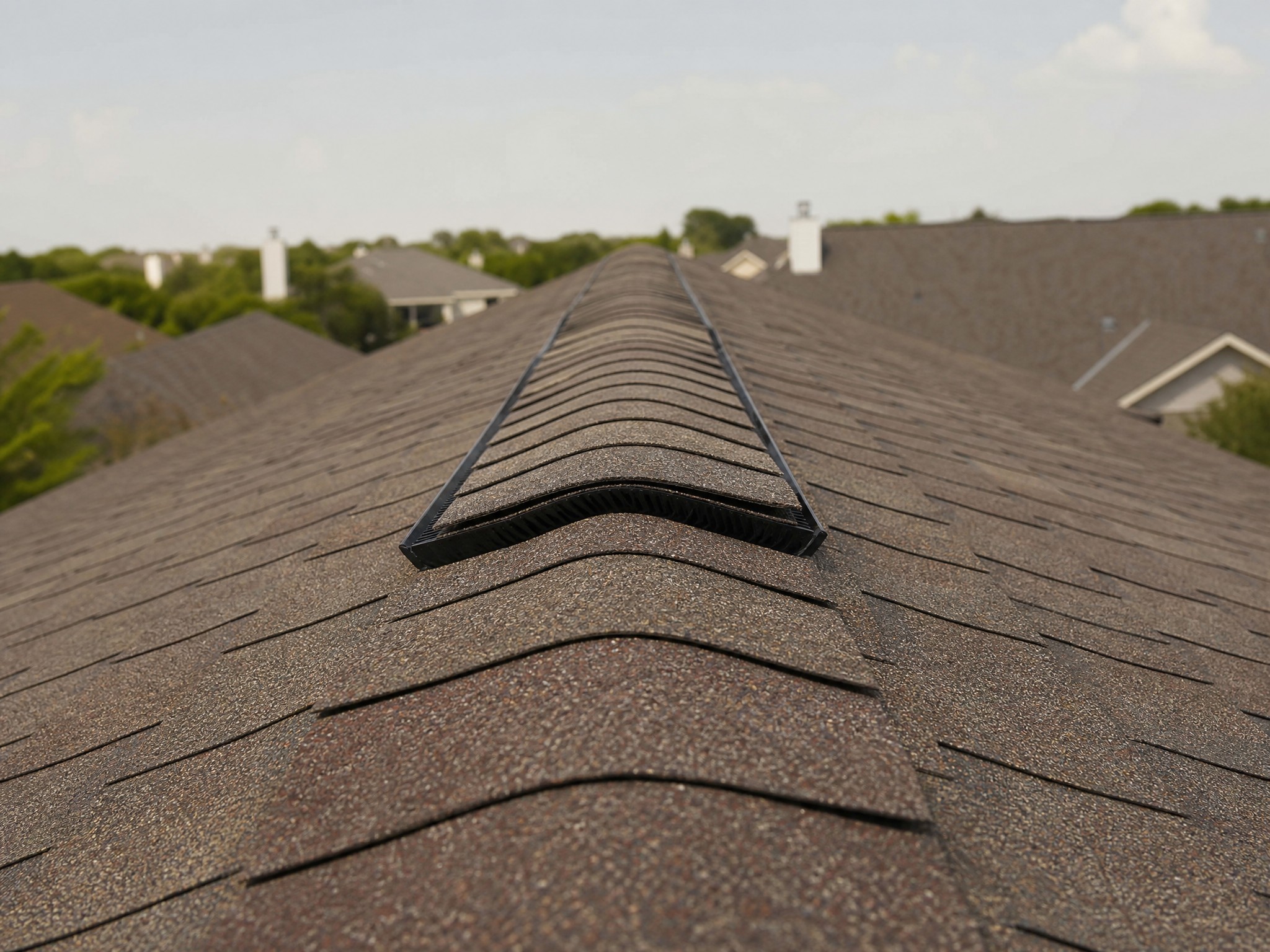
Attic ventilation is the part of a roof nobody thinks about until it causes a problem. In Central Texas, that is a costly oversight. On a typical August afternoon in Temple or Killeen, the surface of an asphalt roof can pass 150 degrees, and the air trapped in a poorly vented attic underneath it climbs right along with it. That heat does two things. It bakes the underside of the roof and ages the shingles from below, and it radiates down into the living space, forcing your air conditioner to run far harder than it should. Good ventilation fixes both.
How ventilation actually works
A properly vented attic works on a simple principle. Cooler air enters low, usually through intake vents in the soffits under the eaves. As that air warms, it rises and exits high, through a ridge vent at the peak or through other exhaust vents. The result is a continuous flow that carries heat and moisture out of the attic instead of letting it build up. The key word is balance. Intake and exhaust need to be roughly matched. Plenty of homes have ridge vents but blocked soffits, which chokes the system and defeats the purpose.
What poor ventilation does to your roof
- Shingles age prematurely as trapped heat dries out the asphalt and curls the edges.
- Many manufacturer warranties are voided when ventilation does not meet spec.
- Cooling bills rise as superheated attic air radiates into the rooms below.
- Moisture builds up in cooler months, leading to mold and rotted decking.
- Roof decking can warp and weaken over time, shortening the life of the whole system.
The moisture side nobody mentions
Ventilation is not only about summer heat. In the cooler, wetter months, warm moist air from the house rises into the attic, and if it cannot escape, it condenses on the cold underside of the roof deck. Over time that moisture rots wood, soaks insulation, and grows mold. A balanced ventilation system carries that moisture out year round, which protects the roof in winter as much as it cools it in summer.
Common ventilation types here
Ridge vents paired with soffit intake are the most effective setup for most Central Texas homes, giving a smooth, continuous flow along the whole roof. Some homes use box vents or turbine vents, which work but cover less area. Powered attic fans can move a lot of air, though they need careful sizing so they do not pull conditioned air out of the house. The right mix depends on the roof shape and the attic, which is why an inspection matters.
When to address ventilation
The best time to correct ventilation is during a roof replacement, when the ridge is open and intake vents can be added or cleared at the same time. If you are not replacing the roof yet, an inspection can still identify blocked soffits or an unbalanced system that can be improved on its own. Either way, getting the airflow right protects the investment and keeps the warranty valid.
How much ventilation a roof needs
Building codes and shingle manufacturers express the requirement as a ratio, commonly one square foot of net free vent area for every 150 square feet of attic floor, split roughly evenly between intake and exhaust. The exact figure depends on whether the attic has a vapor barrier and how the home is built, but the principle holds: a large attic needs a lot more vent area than most homeowners assume, and the intake at the soffits has to match the exhaust at the ridge. A common mistake we find on Central Texas homes is plenty of ridge venting but soffit vents that were painted over, stuffed with insulation, or never adequate to begin with. When the intake is choked, the ridge vent cannot pull air through, and the attic bakes despite looking properly vented from the street. A proper inspection measures both sides of the equation.
Tie it into material choice
Ventilation and material work together. A reflective roof reduces the heat load, and good ventilation removes what heat does get in. Our guide to the best roofing materials for Texas heat pairs naturally with this one. If you want to know whether your attic is breathing the way it should, our team across Killeen and Central Texas will check the full airflow path during a free inspection.
Related articles
Is your attic cooking your roof?
Our inspection checks intake and exhaust airflow, not just the shingles.